
January 13, 2026
2026 Sustainable Transport Award Honors Salvador, Brazil, for its Expansion of Bus Rapid Transit
 ITDP and the Sustainable Transport Award Committee are proud to announce Salvador, Brazil, as the winner of the 2026 Sustainable Transport Award.
Watch the 2026 STA Ceremony broadcast on YouTube.
The year’s STA honor recognizes Salvador’s ambitious expansion and modernization of its bus rapid transit (BRT) system with electric buses, accessible station design, and gender-inclusive workforce initiatives. Honorable Mentions for 2026 include Kochi, India, for its pioneering Water Metro ferry system, and Santiago, Chile, for advancing Latin America’s largest electric bus fleet. Together, these cities exemplify how bold transport investments can reduce emissions, improve mobility access, and transform daily life for millions of people. Salvador’s Municipal Secretariat for Mobility (SEMOB) received the award in a live broadcast ceremony on 11 February 2026, followed by all three cities’ participation in STA Series programming throughout the year.
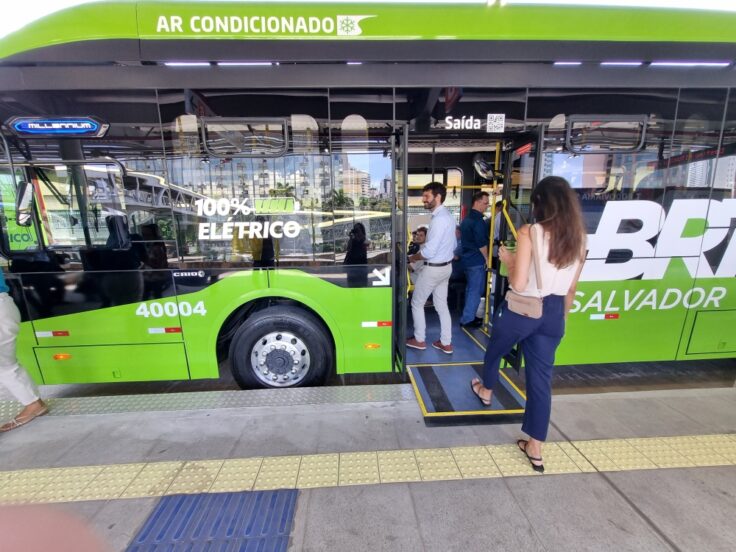
Over the past two years, Salvador has emerged as a leader in sustainable and inclusive public transport, focusing on high-quality and electric BRT centered on expanding BRT Salvador. In 2024, the city inaugurated a new 7-kilometer BRT corridor, bringing the system’s service area to 12-kilometers along two corridors with multiple lines. This expansion further combines modern station infrastructure, electric bus fleets, and redesigned urban spaces aimed at enhancing safety, accessibility, and multimodal connectivity. BRT Salvador also began operating with an electric terminal dedicated to recharging its buses, the first and only electric terminal of this kind in Brazil.
Learn more about ITDP’s strategic vision for increasing ridership on well-funded, electric public transport systems.
Several stations along the new corridor are built for accessibility, with elevators, level boarding, and some tactile guidance for passengers with reduced mobility. A few stations are also equipped with bicycle docks, shared mobility hubs, and links to new cycling lanes, enabling residents to combine bus and bike travel safely. In fact, before these efforts, the route had almost no dedicated cycling infrastructure — now, users have options for safer, greener public transport trips. The environmental impact has also been immediate and measurable. Between 2024 and 2025, the system already reduced 780 tons of cumulative CO₂ emissions, a number expected to grow as the new electric fleet expands its service. Each bus is expected to travel up to 220 kilometers per day, replacing older diesel models and significantly cutting related pollution.
The BRT’s efficiency has also improved the daily experience of passengers. Semi-direct lines connecting hubs like Lapa and the Rodoviária Terminal have cut travel times from 45 minutes to just 18 minutes. According to SEMOB, ridership has grown by 10%, a clear sign of strong public support and satisfaction. Beyond the vehicles and stations, safety and inclusion remain at the core of Salvador’s mobility strategy. Many stations operate with 24-hour security and gender-balanced staff, trained to assist passengers and ensure comfort for all users. This approach reflects a holistic vision of mobility that integrates environmental responsibility, social inclusion, and public well-being. All of this is key to promoting more sustainable transport and reducing unnecessary trips by private vehicles in Salvador.
“This project represents a turning point for mobility across Salvador,” said Pablo Souza, Urban Mobility Secretary at SEMOB. “By investing in electric buses and accessible infrastructure, we are not only changing the way people move throughout the city, but also advancing our broader goals of improving equity, climate action, and quality of life.”
Learn more about the history of the STA since it began in 2005.
Honorable Mention: Kochi’s Water Metro Connects Urban Islands
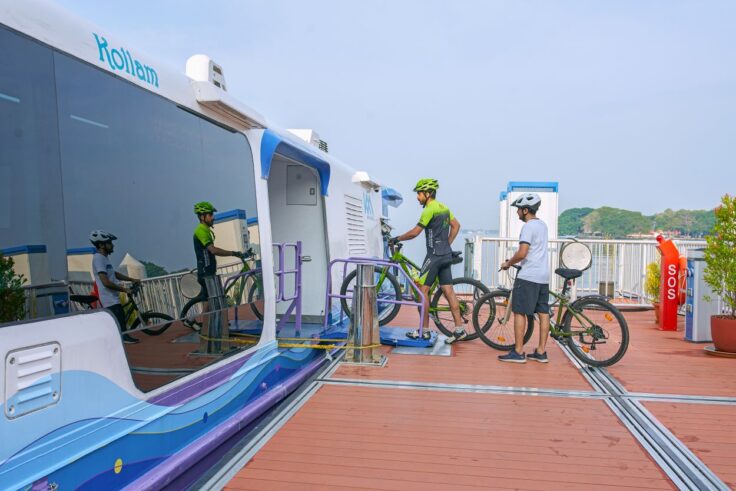
The city of Kochi, India, received an STA Honorable Mention for its Water Metro, a first-of-its-kind public transport system integrating water-based and land-based mobility. Launched in 2023, the Water Metro connects the city’s ten inhabited islands with the mainland through an electric-hybrid ferry network that integrates seamlessly with the metro rail, buses, and cycling paths. Operating with a fleet of 78 electric-hybrid boats, the system provides fast, reliable service at frequent intervals — cutting one-hour road trips to just 20 minutes by water, at nearly half the cost.
Since launch, the Water Metro has carried over 4.5 million passengers, averaging 6,000 daily riders, many of whom previously relied on slower and less safe boat services. Each vessel also features accessibility enhancements, floating pontoons, and advanced safety standards. The hybrid propulsion system helps avoid 184 grams of CO₂ emissions per passenger-kilometer, while minimizing both water and air pollution, a vital contribution in a region rich with aquatic ecosystems. By linking ferry terminals with existing bus and metro networks, Kochi is proving that low-emission, integrated transport can adapt to unique geographies while promoting resilience and inclusion.
Read more about the five STA finalist cities for 2026.
Honorable Mention: Santiago Accelerates Bus Electrification
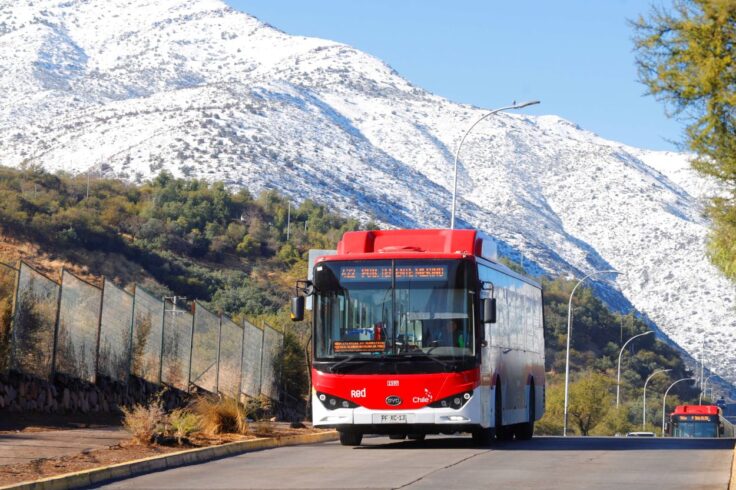
Santiago, Chile, has also earned an Honorable Mention for its sweeping transition toward a 100% electric public bus fleet, supporting Chile’s national goal of carbon neutrality by 2050. Through new bidding processes launched by the Metropolitan Public Transport Authority (DTPM) in 2023 and 2025, Santiago will add 1,900 new electric buses and 55 charging terminals, reaching 4,400 electric buses by 2026, equivalent to 68% of its fleet. This expansion makes Santiago’s RED Movilidad system one of the largest electric bus fleets in the world.
The city’s transition is expected to help avoid 8.6 million tons of CO₂ emissions by 2040, while improving air quality, reducing noise pollution, and offering more comfortable rides for millions of commuters. Electric buses have already shown 65% lower operating costs and 44% lower maintenance costs than diesel counterparts, alongside higher passenger satisfaction. Santiago’s success rests on a robust legal and financial framework, strong public-private partnerships, and sustained investment in charging infrastructure and modern safety technologies. Together, these efforts are transforming the city’s transport system into a global model for sustainable electrification and urban growth.
Download the press release in English, Spanish, Portuguese, Chinese, and Bahasa Indonesia.
“I am delighted by the honorees of this year’s STA program,” said Heather Thompson, CEO of ITDP. “Salvador’s commitment to expanding its BRT shows us that strategic investments and policies can drive real action on electric mobility while improving access, air quality, and equity. Alongside Kochi’s innovative Water Metro and Santiago’s impressive transition to electric buses, all three of this year’s honorees demonstrate that a focus on sustainable public transport can have immense benefits for the climate, the economy, and all communities.”
Since 2005, the Sustainable Transport Award has celebrated cities that continue to demonstrate leadership in advancing sustainable, inclusive, and low-emission mobility. Past winners include Bogotá, Jakarta, Mexico City, Paris, and Pune, all examples of diverse and unique cities that have become models for how sustainable urban development and mobility investments can better support people and the planet. In 2026, Salvador, Kochi, and Santiago are joining this growing community of innovative cities, offering concrete models and inspiration to others around the world. ITDP and the STA Committee look forward to working with these cities on STA Series virtual sessions and knowledge products throughout 2026.
Nominations for the 2027 program open in February 2026 and close in May 2026. Semifinalists will be notified in June/July 2026 with a request to submit additional information. The winner and honorable mentions will then be notified internally in August 2026, with the public announcement taking place January 2027. Please check STAward.org for the latest updates.